


Accelerator PDM
The biggest feature is its comprehensive functionality, which can play different roles in the rubber formula according to needs
Key Information
PDM (chemical name: N,N'-m-phenylenedimaleimide) is a multifunctional rubber additive, commonly known under the trade name HVA-2. Its most notable feature is its versatility: in a rubber formulation it can play different roles as required — it can serve as a primary curing agent, as a co-curing agent in peroxide curing systems, and it also provides scorch protection and tackifying effects.
Core functionality
- Higher crosslinking efficiency and performance: as a co-curing agent in peroxide systems it significantly increases crosslink density and cure rate. In HNBR (hydrogenated nitrile rubber), compounds containing PDM show higher crosslinking efficiency and the best mechanical properties; in brominated butyl rubber it also markedly improves the cure rate and degree of crosslinking.
- Prevention of “reversion”: used together with sulfur in natural rubber, it effectively prevents the performance regression that occurs in thick products cured at high temperature for a long time. It also improves heat resistance, reduces heat build-up and increases the adhesion between the rubber and reinforcing materials such as cord fabric. It is notably effective in solving the “shoulder separation” problem of heavy-duty tires.
- Improved processing safety: it has a scorch-retarding function that prevents premature vulcanization of the compound during processing and improves operational safety.
- Solution to the “copper poisoning” problem: PDM is a sulfur-free curing agent. Using it in cable rubber instead of sulfur-containing curing agents avoids the formation of copper sulfide caused by contact between the copper conductor and sulfur, which would otherwise blacken and contaminate the conductor, thereby safeguarding the electrical conductivity of the cable.
Typical applications
- Specialty rubbers: widely used in EPDM, CSM (chlorosulfonated polyethylene), HNBR, butyl rubber, silicone rubber and many other specialty rubbers. As a co-curing agent it markedly improves crosslinking performance, increases heat resistance and reduces compression set. In EPDM, for example, PDM used together with DCP effectively solves the permanent deformation problem caused by insufficient crosslink density.
- Tires and industrial products: used in the shoulder compound and breaker layers of natural rubber tires to improve adhesion and heat-aging resistance.
- Wires and cables: taking advantage of its sulfur-free nature, it is used in high-end cables to protect the copper conductor from corrosion.
Key physical properties and dosage reference
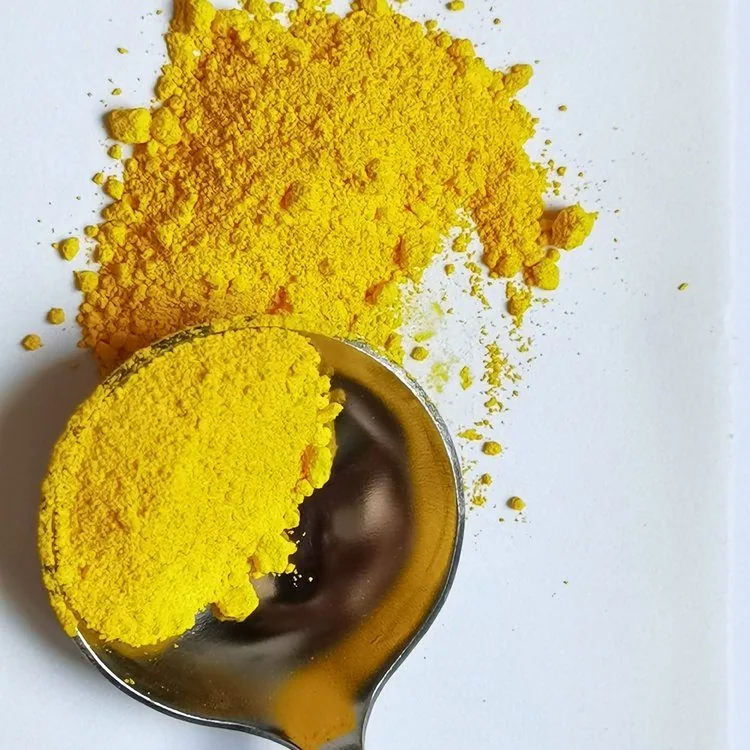
- Appearance: yellow or brown powder.
- Melting point: above 195 °C, with good high-temperature resistance.
- Typical dosage: about 0.5–1.0 phr as a scorch retarder; about 2–3 phr as a primary curing agent; about 1.5 phr for improving compression set; about 0.5–5.0 phr for improving adhesion (based on 100 parts of rubber).
Related Products
Accelerator PDM
The biggest feature is its comprehensive functionality, which can play different roles in the rubber
Crosslinking agent TAIC
It is a key additive for modifying many special rubbers and thermoplastics
Vulcanizing agent VC-01
Specially used as a vulcanization crosslinking agent for chlorine containing thermoplastic elastomer
Accelerator DETU
DETU (diethylthiourea) is a thiourea based rubber vulcanizing accelerator commonly regarded as an up
Vulcanizing agent BIPB
Specially designed to solve the pain points of strong odor and easy frosting of traditional vulcaniz
Flame retardant - DL-35
Mainly used as a substitute for antimony trioxide, for flame retardancy of various rubber materials


Tell us your rubber type and application.
We will recommend a suitable formulation direction.